Beyond Grab Sampling: Why Real-Time IoT Is the New Standard for Water Testing
Grab sampling is one of the default methods of water testing from water bodies such as rivers, lakes, and stormwater storage points. However, this system has become outdated, as current environmental conditions demand much faster and continuous water quality insights. The IoT (Internet of Things) technology is now actively being used in water quality testing. In this blog, we are going to explore how IoT is replacing grab sampling in standard water testing methods.
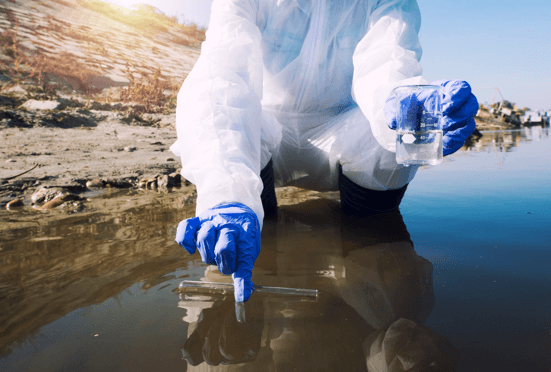
Grab sampling is considered one of the key procedures for water testing, where the sample is collected from a single water source. After taking the sample, it is sent to the laboratory for analysis to discover potential contaminants. However, grab sampling is slowly becoming an outdated and inefficient option for testing contaminated water sources because the data it collects is only based on a snapshot. Furthermore, sending technicians to physically collect samples is expensive and time-consuming. Sample inaccuracy is another key reason contaminations are not properly addressed.
This is why IoT-enabled sensors are becoming more relevant in the field of water testing, which can offer continuous monitoring, overseeing different parameters such as pH, conductivity, and turbidity, with instant alerts upon identification of contaminants.
The Rising Risks Traditional Monitoring Can’t Catch
Periodic water testing, like that of grab sampling, can nowadays become risky, because it cannot address the modern issues.
Short-term Spike in Contamination
Intense weather conditions, such as extreme rainfall and flooding, can cause a rapid, short-term spike of contaminants in the water sources. Periodic water testing can fail in identifying these rapidly changing contamination levels, as these can be missed by the monthly or annual water evaluation.
Industrial Discharge Dumping
Failure in sewage treatment or industrial dumping can contaminate the water sources instantly, with safety concerns appearing in the hours or days between water testing.
Agricultural Runoff
Water accumulated in the pipe overnight can have a higher chance of being contaminated with lead or copper levels compared to the water accumulated after the pipes are flushed. Therefore, taking a single sample can significantly fail.
What are the Key IoT-Systems in Water Monitoring?
The implementation of an IoT-based system in water requires some essential components, which include sensors, gateways, PLC / SCADA Systems, cloud storage, and an analytics platform. Environmental consultants prefer this IoT-based system for water monitoring, considering the continuous testing.
- Sensors: These sensors are usually installed in tanks and pipes with moving static water. They help in analysing the turbidity, pH, dissolved oxygen (DO) in water, and total dissolved solids (TDS).
- PLC / SCADA System: After the signals from all the water quality sensors are processed, relevant actions are taken by the programmable logic controller (PLC). Then these individual PLCs gather data and send it to a centralised monitoring system, known as SCADA (Supervisory Control and Data Acquisition), which allows for operator intervention when needed.
- WiFi connectivity is provided for short-range transmission, while LoRaWAN is used for long-range data transmission within the plant.
- Cloud Storage: All the data retrieved from sensors, after passing through the gateway, is analysed, and the results are stored in the cloud storage.
See also: SEO Agency in Australia – Aelftech: Your Path to Digital Success
Key Advantages of Real-Time IoT Over Grab Sampling
Instead of using grab sampling in water testing, real-time IoT-enabled tools are now more preferred by environmental consultants because of their enhanced efficiency and continuous data collection. Here are some key benefits of IoT-enabled water testing in real-time.
Continuous and Automatic Collection of Data
The combination of an IoT-enabled water system can provide real-time monitoring 24/7. The data transmission is entirely wireless, so the remote monitoring site with SCADA systems can receive real-time alerts and data from multiple locations.
Faster and Accurate Decision-Making
The water quality assessment sensors collect data every second with precise trends. The trending allows decision-making before any water parameters reach a risky condition.
Cost Savings and Resource Efficiency
IoT-enabled water testing can reduce the cost of manual sampling. Furthermore, it increases the chances of detection of any abnormalities early. The resource used in the process can be significantly managed, optimising the chemical dosing and energy needs for water treatment processes.
Parameters That Can Be Analysed Through Real-Time IoT Monitoring
Typical parameters that can be tested through an integrated IoT system in water testing methods include:
- Turbidity: To measure the quantity of suspended particles in the water source.
- pH: Measuring acidity or alkalinity of water
- DO: Measures the dissolved oxygen content in the water bodies.
- Conductivity: Evaluates the ionic contents in the water
- TDS: Detecting Total Dissolved Solids.
Where can IoT-enabled systems be installed in Real-Time Water Testing
IoT-enabled water testing systems can be used in in-situ water sources, combining fixed sensors. Here are some potential areas where the real-time IoT-enabled water testing can be installed.
- Natural water bodies like rivers, lakes, oceans, and wetlands
- Urban water systems, like pipelines, for leak detection
- Agricultural and aquaculture locations, especially in irrigation networks.
- Industrial wastewater setting
Wrapping Up
Grab sampling is slowly becoming outdated because it provides limited, delayed, and often misinterpreted insights, which do not show the whole picture regarding contamination. Real-time IoT-enabled water testing offers relentless, proactive monitoring. Furthermore, it reduces risk and increases the response time significantly.
Consider Hiring a Professional Environmental Consultant for Water Testing!
Do you want to conduct water testing at your project site? Partner with a certified environmental consultant for advanced IoT-enabled water testing.