
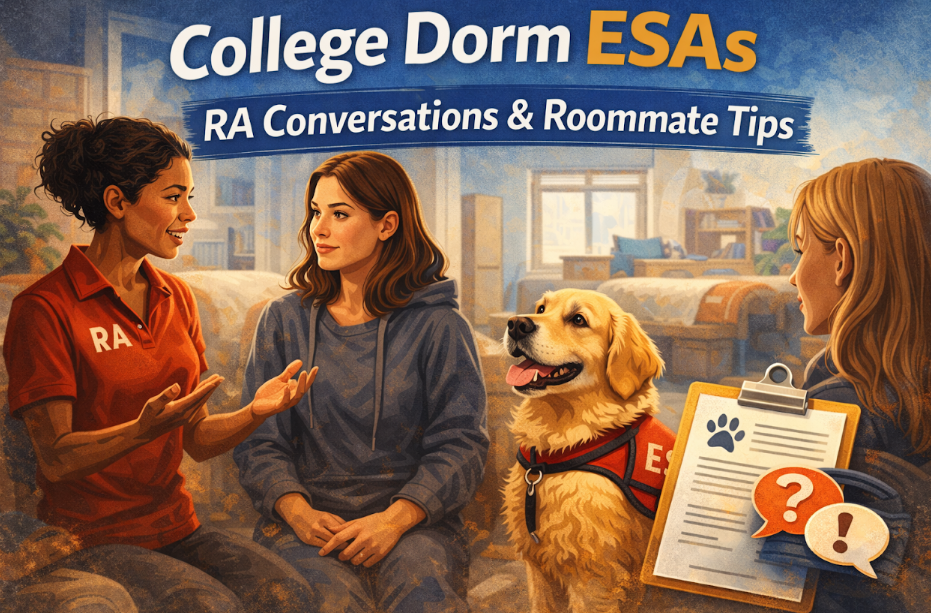
College Dorm ESAs: RA Conversations & Roommate Tips
Living in a college dorm is an exciting experience, but it can also bring challenges, especially for students who rely on an Emotional Support Animal (ESA). Unlike service dogs, ESAs don’t have unlimited public access, but they do have special protections under housing laws. This means dorms, apartments, and campus housing must usually make reasonable accommodations.
If you’re preparing to bring your ESA to college, you’ll likely have to talk with your Resident Advisor (RA) and roommates. These conversations may feel intimidating at first, but with the right approach, preparation, and documentation, you can create a smooth living environment for everyone.
This guide will help you understand college dorm ESA rights, how they differ from service dogs, what to say to your RA and roommates, and practical tips for respectful communication.
ESAs vs Service Dogs: Access Basics
The first step in understanding your rights is knowing the difference between ESAs and service dogs.
- Service Dogs – These animals are trained to perform specific tasks related to a disability, such as guiding individuals who are blind or alerting someone before a seizure. They are protected under the Americans with Disabilities Act (ADA) and have broad public access rights. This means they can go into classrooms, libraries, cafeterias, hotels, and most public spaces.
- Emotional Support Animals (ESAs) – These animals are not trained to perform specific tasks. Instead, they provide comfort and emotional support to individuals with a mental health condition. ESAs do not have the same ADA public access rights as service dogs. However, under the Fair Housing Act (FHA), they are allowed in housing that normally restricts pets, including college dorms.
This difference is key. If you’re a student with an ESA, you are entitled to live with your animal in your dorm, but you cannot expect to bring them to lecture halls, libraries, or campus dining halls.
Housing vs Public Access
It’s natural to feel confused about where ESAs are allowed. The line is clear once you break it down:
- Housing Access – Your ESA is permitted in your dorm room, apartment, or other on-campus housing under college housing ESA protections. The school must make reasonable accommodations unless it causes an undue burden (like severe allergies among roommates).
- Public Access – ESAs are not guaranteed access to places like classrooms, libraries, labs, or dining halls. Those rights apply only to service dogs.
- Hotels Policy & Workplace Notes – ESAs may not be automatically allowed in hotels or workplaces. Hotels often follow pets allowed policies rather than housing accommodations, and workplaces can set their own rules unless state law gives ESAs more protection. Always check workplace policies and hotel policies before bringing your ESA.
Want to make sure your ESA is fully protected in housing? Paw Tenant makes it simple. Start with a verified ESA letter today and move into your dorm with confidence.
How to Ask Politely
Talking about your ESA can feel awkward, but being upfront and respectful goes a long way. Here are some practical tips:
Scripts for Conversations
- Talking to Your RA:
“Hi, I wanted to let you know that I’ll be living with an ESA this semester. I have the proper documentation, and I’d like to discuss any steps I need to take to make sure everything is handled correctly.”
- Talking to Roommates:
“I live with an ESA for health reasons. I’ll keep things clean and make sure my ESA doesn’t interfere with your space. If you have concerns, I’m open to working them out together.”
Documentation to Bring
When speaking with your RA or housing office, always bring:
- A valid ESA letter from a licensed mental health professional.
- Any forms your school requires for housing accommodations.
- Contact information for your clinician (sometimes schools need verification).
Being prepared shows responsibility and makes the conversation smoother. Need an ESA letter? Here’s how to get one.
When You Can Be Asked to Leave
Even though your ESA is protected under housing rights, there are situations where you might run into issues. Knowing these in advance helps prevent problems:
- Aggressive or Dangerous Behavior – If your ESA shows aggression, bites, or threatens others, the school may remove the animal.
- Property Damage – Consistent destruction of property (chewing furniture, scratching walls) could lead to removal.
- Severe Allergies – If a roommate has a documented allergy that conflicts with your ESA, the housing office may have to make adjustments, such as moving one of you to a different room.
- Neglect or Poor Care – Schools can act if the animal is not being properly cared for, such as a lack of hygiene or unsafe living conditions.
By keeping your ESA well-trained, clean, and respectful of others, you’ll likely avoid these issues.
College/Workplace Special Notes
While housing is protected, colleges and workplaces each have different rules for ESAs.
- College Housing ESA Rules: Most schools require you to register your ESA with the housing office and provide documentation before move-in. You may also need to meet with your RA to discuss shared space expectations.
- Workplace Policies: Unlike housing, workplaces are not automatically required to allow ESAs. Some companies may permit them under wellness initiatives, but most will rely on existing pet policies. Always ask before bringing your ESA to work.
By understanding these differences, you can avoid misunderstandings and keep your ESA where they’re truly allowed.
Roommate Tips for Smooth Living
Roommates can be your biggest allies, or your biggest challenge. Setting the right tone from the beginning ensures harmony in your shared space.
Start Early
Before move-in day, send a message or talk in person:
“Just so you know, I have an ESA. They’re part of my housing accommodation, and I’ll make sure they don’t interfere with your side of the room.”
Set Clear Boundaries
Some roommates love animals. Others may prefer no contact. Ask simple questions:
- “Would you like me to keep the ESA out of your area?”
- “Do you prefer I don’t let them on your bed or belongings?”
Respecting these boundaries shows maturity.
Share Responsibilities
Even though the ESA is your responsibility, small gestures go a long way. For example:
- Keeping cleaning supplies on hand.
- Using an air purifier if your ESA sheds.
- Scheduling regular baths or grooming.
Address Concerns Quickly
If your roommate raises a concern, noise, smell, or allergies, don’t wait. Address it immediately. Involving the RA should be a last resort, not the first step.
See also: Wearable Devices That Monitor Your Health
Workplace Policies vs College Housing ESA
Students often ask: “If I can have my ESA in college housing, can I take them to work?”
The short answer is no, not automatically. Workplace protections are very different from housing rights. Here’s a breakdown:
- College Housing ESA: Protected under the Fair Housing Act (FHA). Schools must make reasonable accommodations in dorms or student housing.
- Workplace Policies: Employers are not required to allow ESAs. They can say no, unless state law offers extra protection. Some progressive workplaces allow ESAs voluntarily, but it’s a privilege, not a right.
- Hotels Policy: Hotels are not housing, so ESA protections don’t apply. Policies vary widely. Some hotels treat ESAs like pets and may charge fees, while others allow them if you provide paperwork. Always check in advance.
Understanding these differences saves you from awkward situations and keeps expectations realistic.
When You Can Be Asked to Leave
We touched on this earlier, but it’s worth repeating. Even though college housing ESA rights protect you, violations can still lead to consequences. A school has the right to intervene if:
- Your ESA poses a direct threat to health or safety.
- The animal causes substantial property damage.
- There’s a fundamental conflict, such as a roommate’s severe allergy.
In these cases, the housing office may suggest moving you or your roommate to a different room, or, in rare cases, removing the ESA. To prevent this, always show responsibility, feed, groom, and monitor your ESA consistently.
Conclusion
Living with an ESA in college dorms requires balance. On one hand, you have clear housing rights that allow you to keep your support animal in your dorm room. On the other, you also share space with roommates, classmates, and campus staff who may not fully understand what an ESA is.
The key is preparation and communication. Bringing the right documentation, talking openly with your RA, and showing respect for your roommates can prevent most issues before they begin. Unlike service dogs, ESAs don’t have broad public access rights, so being realistic about where your animal can and cannot go is important.
By handling these conversations with care, you protect your rights while also building a supportive living environment. College is already a huge transition, your ESA should make that journey easier, not harder.
FAQs
1. Do I need an ESA letter for college dorms?
Yes. An ESA letter from a licensed mental health professional is the foundation of your housing accommodation request. Without it, your ESA is considered a pet and may not be allowed.
2. Can my RA deny my ESA?
No, not if you provide valid documentation. RAs cannot override housing accommodations. However, they may enforce reasonable rules about cleanliness, noise, or safety.
3. Can I take my ESA to class?
No. ESAs do not have ADA public access rights. They are allowed in housing, not classrooms, libraries, or dining halls.
4. What if my roommate has allergies?
The school may relocate one of you to resolve the conflict. Both needs are valid under disability accommodations.
5. Do ESAs have the same rights in hotels?
No. Hotels are not covered by the FHA. Check each hotel’s policy before booking.